







































India’s power sector accounts for 1 GtCO2 in annual GHG emissions and is responsible for 40% of India’s total greenhouse gas emissions, as per latest reports. The power sector has undergone rapid transformation in recent years, and our country has successfully electrified all the rural-urban households through adequate power generation capacity facilitated by an integrated national grid system (PIB, 2023). India’s per capita energy consumption currently stands at 1,208 kWh, up from 559 kWh levels in 2001. As the Indian economy gathers greater momentum and higher standards of living in the coming decades, power demand is expected to quadruple by 2050, driven by increased electrification and the uptake of green hydrogen to transition to a low-carbon power sector.

Related Read: EU PPWR: The Global Evolution of Packaging Regulation
Based on India’s COP26 commitment, our ambitious goals are to decarbonize the power/energy sector to 50% and achieve 500 GW of non-fossil-fuel–based generating capacity by 2030. Decarbonizing the electric power industry is crucial to meet the growing demand for energy while also reducing overall carbon emissions from this sector and achieving net-zero targets. According to a PIB report, in India, renewable energy generating capacity reached 220.10 GW by March 31, 2025, after making a record 29.52 GW in FY 2024-25.
Policy Frameworks for Power Sector Emission Reduction/Decarbonization
India’s ambitious targets for decarbonization of the power sector rely on its capacity targets and market mechanisms to boost renewables while curbing fossil fuel reliance. There are various frameworks and policies to meet the global energy and domestic targets, such as the National Green Hydrogen Mission, PM-KUSUM, PM Surya Ghar, Carbon market initiatives (carbon credit trading schemes), National tariff policy, and PAT scheme. They focus on power generation, demand creation, infrastructure, research, and development, which support achieving the country’s net-zero targets.
SBTi Sector guidance for Power Sector Decarbonization
SBTi has developed specific guidance for the power sector to ensure the set emissions reduction targets align well with the 1.5-degree Celsius pathways and net zero commitment by 2050. The guidance mandates power sector companies generating electricity to adopt a sectoral decarbonization approach for all electricity sold, aiming to decrease generation emissions towards near-zero gradually while reducing unabated fossil fuel capacity and enhancing the portion of low-carbon generation technology.
National Action Plan on Climate Change (NAPCC)
NAPCC was launched in 2008, and it sets India’s broader strategy through eight National Missions. In 2025, India achieved the milestone of installing 100GW solar energy generating capacity and is driving strong decarbonization of the power sector.
National Green Hydrogen Mission (NGHM)
The National Green Hydrogen Mission, 2023, anchors India’s goal for decarbonizing the power sector and building a global energy hub for green hydrogen production. It targets at least 5 MMT of green hydrogen by 2030 and ~125 GW of renewables (MNRE Report).
Policies for Electric Mobility and Clean Transport
For decarbonizing the transport sector, the FAME India Scheme was launched, supporting electric mobility. The funding includes upfront purchase incentives, installing charging infrastructure with more focus on public transport and two-wheelers.
Major Challenges in the Decarbonization of the Power Sector
Decarbonizing the power sector faces infrastructural, financial and grid integration challenges. India’s projected increase to 1,921 million tonnes of oil equivalent of primary energy demand by 2040 shows an average annual growth of ≈4.2 % over 2016-2040 (Science Direct, 2025). High dependence on fossil fuels requires reliable renewable capacity and storage, thus increasing overall cost. The transition also risks, such as job losses and loss of livelihood for vulnerable communities.
Market commitment, financial risks, demand uncertainty, low profitability, and shortage of trained labour are a few main obstacles faced by renewable energy investors in different regions. Ineffective subsidy programs, poor implementation, and lack of awareness are hindering the adoption of decentralized solar photovoltaic systems and other effective renewable energy technologies.
Key Steps Towards Achieving Power Sector Decarbonization
Switching to Clean Energy

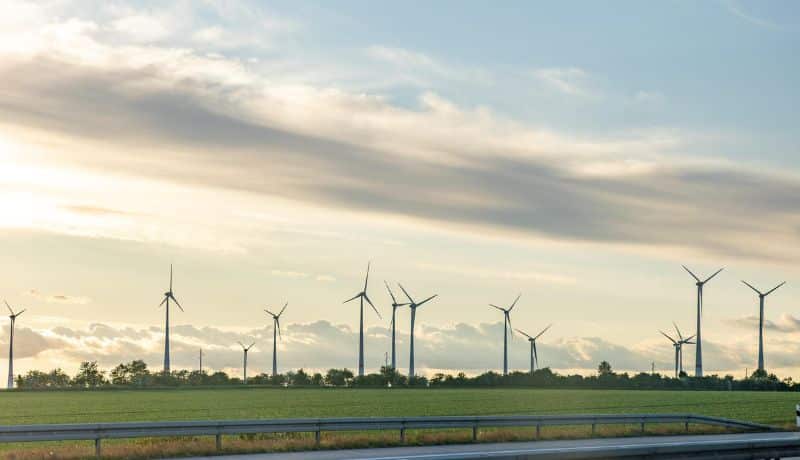
To reduce power sector emissions and achieve decarbonization, facilitating energy transitioning by replacing carbon-intensive fossil fuels with renewable energy sources like solar and wind power, hydro, and biomass will be helpful. Indian businesses can take stronger initiatives in investment and operational decisions, such as building new facilities, replacing old equipment, and upgrading to renewable energy sources, etc. National renewable energy capacity has reached 209 GW by 2024 across solar and wind power, and hydro, meaning 15.8% jump from 2023 capacity.
Electrification of Transport Sector and Industry
Shifting towards an electricity-based transportation system with clean fuel such as replacing petrol or diesel with electric vehicles, and green hydrogen to decarbonize the power sector. Developing eco-friendly public transportation, replacing the non-renewable source of energy with low-carbon fuel/energy to reduce carbon output. Under FAME II, a total of 14,028 electric buses and 24.79 lakh electric two-wheelers will be provided.
Energy Efficiency and Adoption of Low-Carbon Technologies
Energy transition majorly includes upgrading to energy-efficient appliances, better industrial equipment, well-insulated buildings, optimizing processes in factories, and using technology such as carbon capture and storage (CCS) to trap emissions from factories or power plants, and enhancing circular economy practices. India’s UJALA scheme has distributed hundreds of millions of LED bulbs nationwide, reducing electricity use and avoiding around 40 MTCO₂ each year by replacing traditional inefficient bulbs with modern efficient bulbs.
Afforestation and Expanding Carbon Sinks and Offsets
Forests act as carbon sinks, which is one natural way to offset residual emissions from the atmosphere. India’s forests already absorb about 522 million tonnes of CO₂ annually, offsetting 22% of emissions; hence, protecting and expanding forests is highly crucial to meet the global commitments made by India. A flagship example is the Mangrove Initiative for Shoreline Habitats & Tangible Incomes (MISHTI) project, which plans restoration of 540 km² of mangroves across coastal states for increasing carbon sinks and offsets.
Promoting Stakeholder Collaboration and International Partnerships

Related Read: Why Supplier ESG Is Becoming a Business Imperative
Public-private partnerships can accelerate India’s power sector decarbonization by penetrating private capital, expertise, and technology into grid upgrades, storage deployment, and renewable technology integration, addressing financial and infrastructural crises. Therefore, cross-border cooperation and boosting local partnerships can improve the power sector outlook of India.
Conclusion
Integrating renewable energy sources into the current space is a vital component for decarbonizing the electric power industry in India. As India progresses towards achieving its climate goals, improving energy efficiency, expanding renewable energy, and promoting inclusive socioeconomic policies will be a crucial aspect. Various existing tools and strategies aid in integrating renewable energy into electricity systems and storage systems to balance renewable energy generation, excess load, and discharge when load exceeds the generation and flexible loads, move loads to periods of high production. Decarbonizing power sector requires a balanced approach, advancing renewable energy while also safeguarding jobs, equity, and the development of the nation for attaining prosperity.
Why Choose Ascentium?
At Ascentium we have the expertise to manage various sector decarbonization projects, including power, cement, steel, chemicals, and other vital sectors, and deliver end-to-end solutions from data collection, setting boundaries, preparing GHG inventory, GHG emission calculation, emission reduction initiatives, providing tailored decarbonization roadmaps, and policy-aligned strategies. Ascentium stands out for India-centric solutions that turn regulatory compliance into competitive advantages, backed by content creation prowess for stakeholder reporting and green financing pitches. If you have any questions or require assistance regarding our process, please write to us at in-info@ascentium.com or reach out to us at (+91) 77380 66622.