









































If you are uncertain about the DPDP Act, you are not alone. Many stakeholders are still navigating its scope and implications. Digital Personal Data Protection Act was introduced in India due to the increased focus on compliance with data privacy. The law is the next step which corporations and individuals will use in managing personal information. DPDP Act was introduced in 2023 based on the frameworks such as the GDPR, but specific to India.
What is the DPDP Act?
The Digital Personal Data Protection Act is a positive step to protecting online personal information in India. The Act was completed following the discussions on data protection bill in August 2023. The Digital Personal Data Protection Act 2023 or Data Protection Act 2023 is a legislation that gathers regulations regarding the processing of personal data by an individual or organization.
The Act identifies two important positions, including data principals (the people whose data are being gathered) and data fiduciaries (businesses or organizations that use their data). Personal information comprises of phone number or email. Others that handle this data are data fiduciaries, including e-commerce or banks. This is because the DPDP rules (detailed regulations) are being developed, and the DPDP rules 2025 will likely describe enforcement.
The DPDP Act is partially in force and some of the provisions are already effective. But the whole implementation schedule has not yet been accomplished and laws on data privacy in India are developing and taking shape very fast. It is the main Indian data protection legislation which employs GDPR-like principles to the Indian context.
Business implication of the DPDP Act
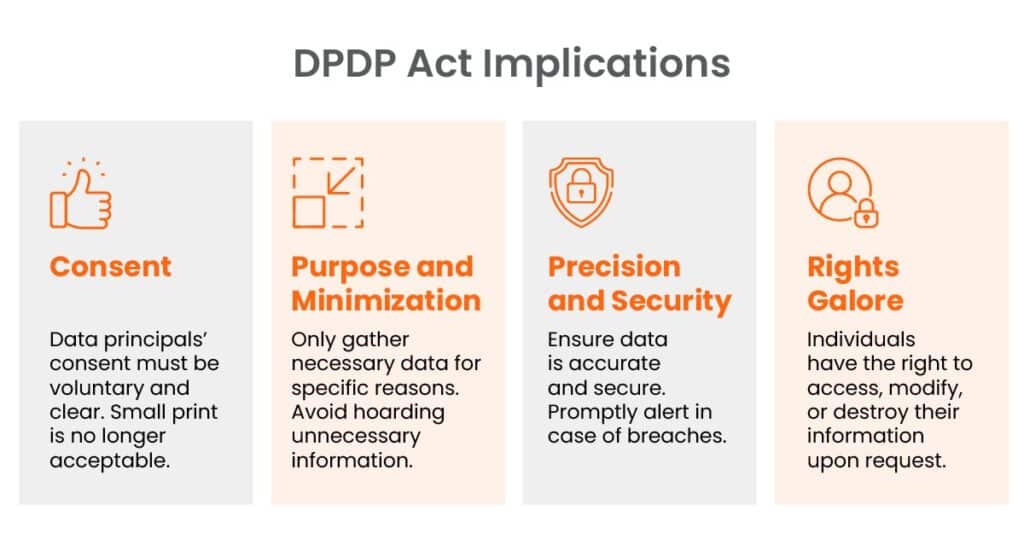
Implications of the DPDP Act on Businesses: Major implications
The Key Provisions of DPDP Act
The existing laws in data protection provide that data fiduciaries shall have compliance officers. The maximum fines in case of non-compliance may go up to INR 250 crores in value.
Section 7 of the DPDP Act: Non-Consent-based Legitimate Uses
Section 7 of the Act allows Data Fiduciaries to have personal data processed without any express consent in certain situations including when data principals willingly consent to supply it to achieve a certain objective and they do not object (7(a)). Objection or rights under Section 12 are the means of withdrawal, and DPDP Rules underline the use of tech in order to provide notice and compliance.
DPDP Act and Cybersecurity
The Act does not qualify as a cybersecurity act but has much in common with the data privacy requirements. It stipulates the protection of any personal data against any breaches, which are in line with other laws such as the IT Rules 2021. The former cybersecurity frameworks have been developed: the Act focuses on encryption, access controls, and audits.
Personal data protection act is an addition to cybersecurity measures; non-adherence to it and breaches could result in considerable fines. The privacy legislation of India grants high-security standards as a fundamental duty of data fiduciary.
DPDP Rules 2025: What’s Ahead?
The DPDP Act, 2023 and the DPDP Rules 2025 establish compliance obligations for data fiduciaries, including safeguards for personal data and regulated cross-border data transfers. The framework generally allows data transfers outside India, with the government retaining the power to restrict transfers to certain countries and to mandate localization for specific categories of data. The rules were finalized in November 2025 and are expected to be implemented in phases after a transition period to allow organizations to comply.
Nailing DPDP Data Privacy Compliance
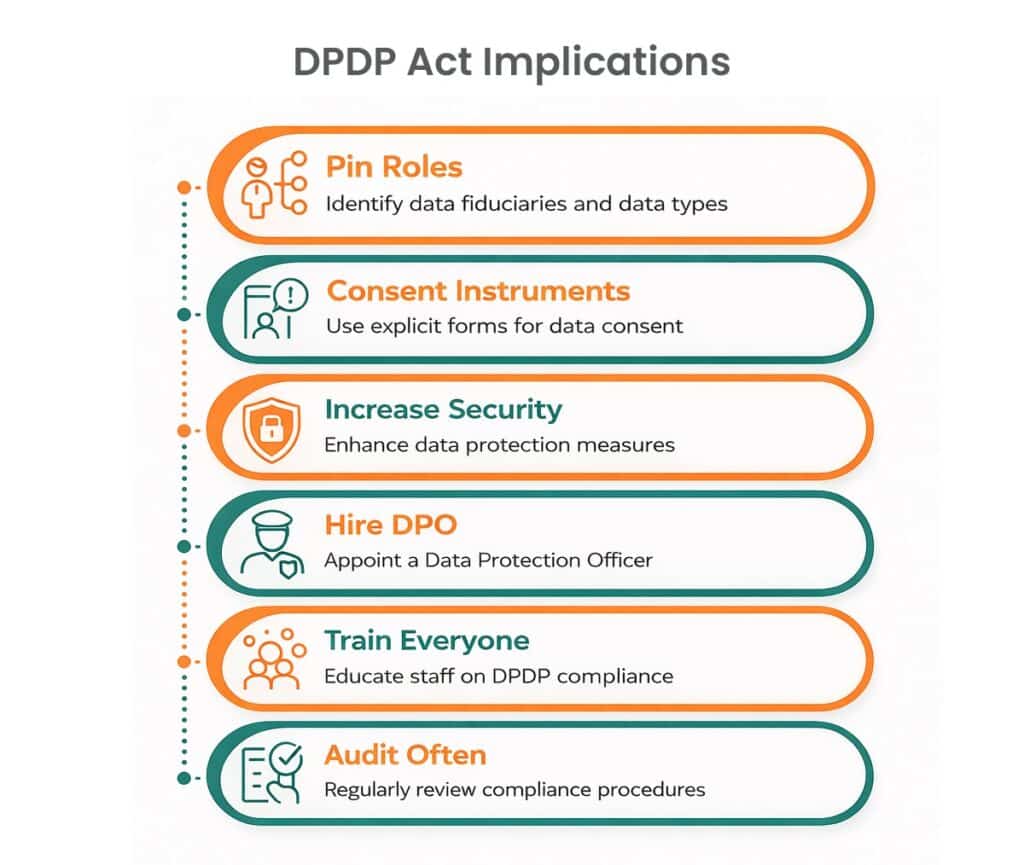
Achieving Compliance of the DPDP Act with Data Privacy.
Smaller firms will not be subjected to such intense demands; bigger ones such as Google will be under heavier inspection. These are the basics of the compliance with the Digital Personal Data Protection Act.
The Digital Personal Data Protection Act is not just bureaucracy, but it gives the assurance on the privacy of data of India by the laws on data privacy. It has 1.4 billion online people which mitigates the risks of data leakage. Being the GDPR counterpart in India, it increases confidence in international enterprises. Data Fiduciaries should put responsibility first, or they may face significant penalties.
Start compliance with data privacy today to prevent the problems in the future. To conclude, the DPDP Act, its regulations, and the Digital Personal Data Protection Act are revolutionary.
Why Choose Ascentium?
At ascentium, our approach combines technical expertise with regulatory knowledge to make DPDP compliance achievable. Our team includes certified professionals (CISA, CDPSE, FCA, LLB) with actual experience implementing these frameworks at healthcare organizations, financial institutions, and tech companies. We manage comprehensive DPDP work: gap analysis, compliance program design, Data Protection Officer services, vendor due diligence, Consent Manager integration, breach response planning, and ongoing compliance monitoring. We’ve built our approach to match the government’s 18-month timeline, helping you prioritize what’s highest-risk while creating compliance infrastructure that lasts. Contact our Cyber Security practice for a confidential discussion about supporting your organization’s data protection goals. To learn more about our services, please email us at in-info@ascentium.com or reach out to us via WhatsApp at (+91) 77380 66622. Disclaimer: This article provides general information about the DPDP Act and shouldn’t be treated as legal advice. For guidance specific to your situation, consult with qualified legal and technical professionals who understand your business.
Disclaimer: This article provides general information about the DPDP Act and shouldn’t be treated as legal advice. For guidance specific to your situation, consult with qualified legal and technical professionals who understand your business.
Authored by:
Supriya J | Cybersecurity