



































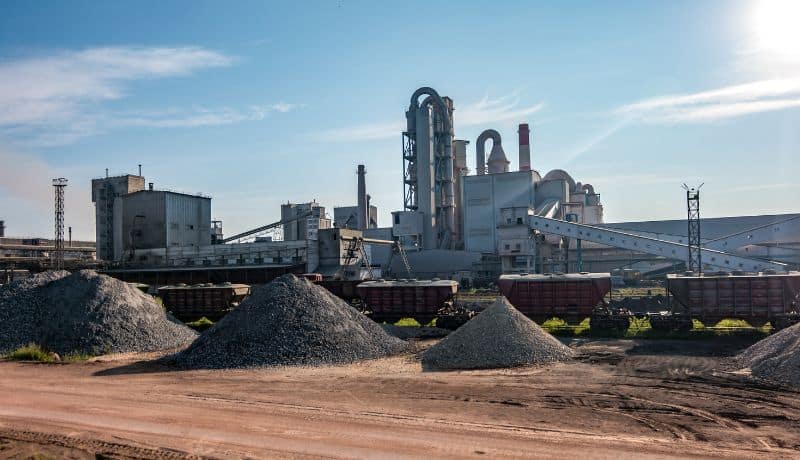
In India, cement sector is amongst the largest sources of carbon emissions, accounting 6% to 7% of the country’s total emissions. Although India is the second largest producer of cement globally after China, with ~8% of globally installed production capacity as of 2024, its per capita cement consumption is only 257 kg significantly lower than the global average of 540 Kg (DPIIT, 2023).
As per Statista (Carbon dioxide emissions from the manufacture of cement in India from 1960 to 2023), CO2 emissions from cement sector manufacturing in India have risen due to increased economic growth, population outbreak, and urbanization plans, almost fourfold since the turn of the century, reaching 177 MtCO₂ in 2023.

The total emissions (Scope 1 & 2) from the Indian cement sector in 2020-21 were estimated as 226 million MtCO2 (Industry analysis, TERI 2022 – Decarbonization Roadmap for the Indian Cement Sector). As per TechSci (India Construction Market is expected to grow at a CAGR of 6.87% Through 2030), domestic construction activity is expected to expand at a CAGR of 6-8%, with the industry valued at nearly $640 billion in 2024 and forecast to approach $963 billion by 2030.
Major Sources of CO₂ Emissions in Cement Manufacturing
| Emission Source | Description | Scope 1 & 2 Emissions |
|---|---|---|
| Calcination process | Decomposition of limestone during clinker production | 57-60 % |
| Process heating/ combustion of fuels | Burning fuels to heat kilns & pre-calciners | 27-30 % |
| Electricity use | Indirect emissions from electricity consumption (Scope 2) | 10-13 % |
| Limestone mining | Emissions associated with mining activities | 1-2 % |
Decarbonization of Indian Cement Sector through Sustainability Technology
Decarbonization levers and sustainability technology identified to achieve net zero emissions and cement sustainability by 2070 includes reducing the clinker content per tonne of cement and enhancing the thermal efficiency of kiln operations to directly lower process-related CO2 emissions. Key measures also include using alternative fuels, enhancing use of Supplementary Cementitious Materials (SCMs) by using materials like fly ash, slag, calcined clay, decarbonization of electricity by sourcing electricity from renewables and improving electrical efficiency in plant operations. In addition, the roadmap for the development of new low-carbon binders to reduce reliance on traditional Portland clinker, deployment of Carbon Capture, Utilization and Storage (CCUS), promotion of re-carbonation of concrete over its lifetime, and improving cement-use efficiency through optimized mix designs, structural planning, and material efficiency.
Some key examples are as below:
Blended Cements & Clinker Substitution for ensuring Carbon Neutrality

Related Read: Why Supplier ESG Is Becoming a Business Imperative
Traditional cement relies heavily on clinker produced by heating limestone at elevated temperatures, a process that emits CO₂. blended cement, which is green, durable and sustainable developed by GCCA India in collaboration with NCCBM in 2022. It reduces the amount of clinker by replacing part of it with other cementitious materials such as fly ash, slag, or supplementary cementitious material.
Utilization of Green Cement for Sustainable Growth
Use of supplementary cementitious materials, such as industrial byproducts like slag, fly ash, and calcined clay to replace part of clinker, the main CO₂ intensive ingredient is known as green cement. It has improved material efficiency and effective circular-economy practices like reusing waste materials, optimizing mix design, and reducing clinker-to-cement ratio.
Cleaner Energy, Alternative Fuels and Energy Efficiency for achieving net zero cement
Cement kilns have historically used fossil fuels to reach required high temperatures. Now, manufacturers are switching to alternative fuels like biomass, waste-derived fuels, or using renewable energy. Energy-efficiency measures like better kiln design, waste-heat recovery systems, and optimized processes also reduce energy demand and emissions per unit of cement along with achieving carbon neutrality targets.
Driving Cement Sector’s Green Transition and Sustainable Growth
Science Based Targets Initiative Cement Sector Guidance
The Science Based Target initiative provides a framework that helps cement sector companies set science-based emission reduction targets. It outlines methodologies that are specific to the cement sector, as the sector is third-largest industrial energy consumer, and emissions from the sector contribute to 7% of global emissions (SBTi Cement Guidance). The guidance includes sector specific pathways which include both direct scope 1 emissions from clinker production and indirect from scope 2 and scope 3 categories. It also sets out performance-based intensity targets such as emissions per tonne of cementitious product making it simpler for companies to track progress. The guidance also highlights key decarbonization strategies like lowering clinker content in cement, improving energy efficiency, using alternative fuels and renewable energy, and investing in Carbon Capture, Utilization, and Storage (CCUS).
Four steps for companies in the cement sector and concrete value chain to establish science-based targets include:
- Decide the Target Boundary and approaches using the SBTi Cement Guidance and SBTi Criteria assessment documents to identify how to set sectoral decarbonization targets for relevant scopes and categories.
- Emission Inventory Calculation following the guidance provided by the GHG Protocol.
- Develop the Sectoral Decarbonization Approach (SDA) targets using the SBTi too, and the emissions that are not covered under cement SDA can also be modelled using the SBTi tool to meet the SBTi criteria.
- Submit Targets–complete the target submission form and submit the targets for validation.
Greenhouse Gas Emission Intensity Target Rules, 2025

The government has notified legally binding GEI Target Rules requiring heavy industries including cement plants to cut greenhouse gas emissions per unit of product starting FY 2025-26. Roughly 186 cement units are covered, with emission intensity reduction targets ranging from 4.7% to 7.6% by 2026-27 from a 2023-24 baseline. This marks India’s first compliance-based emissions scheme for energy-intensive sectors.
Carbon Credit Trading Scheme, 2023
CCTS enabled by the Energy Conservation (Amendment) Act, 2022, establishes a domestic carbon market where credits can be traded. Under CCTS, GEI Targets are enforceable, and entities can sell surplus carbon credits or purchase shortfalls to comply with.
Certifications, Transparency & Standards
Global Cement and Concrete Association recently launched a Low Carbon Ratings scheme in 2025, a classification that helps builders, architects, governments, and buyers choose lower-carbon cement or concrete for construction and building materials. Industries are adopting it by switching to low-waste generation technologies.
Decarbonization Roadmap for Indian Cement Industry
Developed by GCCA India and TERI, the roadmap aligns the cement sector’s strategy with India’s net zero CO₂ by 2070 commitment. Outlining pathways to reduce emissions including clinker substitution, alternative fuels, energy efficiency, and clean technologies, the roadmap suggests interim targets and sectoral support through policy and financial incentives.
Risks, Opportunities, and Business Implications
The cement sector faces significant business risks driven by intensifying environmental, regulatory, and financial policies. Key risks include regulatory compliance costs due to stricter emissions standards, carbon pricing increasing operating costs, technology investment barriers of advanced systems such as CCUS and electrified kilns have high capital cost, long payback periods and supply chain shifts in context of scarce availability of alternative materials constrain blended cement supply.
Conclusion
Cement production is one of the biggest contributors to global CO₂ emissions. To make cement sustainable and ensure sustainable growth the industry must cut emissions per tonne not just by boosting energy efficiency, but also by switching to “green cement.” Limestone Calcined Clay Cement or LC3, an alternative binder to Ordinary Portland Cement (OPC), the most widely used type of cement today and is potential solution to cut emissions. Replacing traditional clinkers with supplementary materials, using cleaner energy, and adopting modern technologies is crucial for ensuring ESG integration within the system to achieve net zero emissions.
Why Choose InCorp Global?
At InCorp Global, our sectoral focused expertise and end-to-end support for climate and ESG integration assists companies develop tailored decarbonization strategies, gap identification and align key regulatory frameworks. The team’s ability to deliver high level scoring maps, documentation and submission support aligns well with client’s requirements and meets investors’ expectations making InCorp the right strategic choice for forward looking organizations. To learn more about our services, you can write to us at in-info@ascentium.com or reach out to us via WhatsApp at (+91) 77380 66622.
Source:
- Carbon dioxide emissions from the manufacture of cement in India from 1960 to 2023
- Decarbonization Roadmap for the Indian Cement Sector
- India Construction Market is expected to grow at a CAGR of 6.87% Through 2030
Authored by:
Deeksha Modgil | ESG and Sustainability