








































Environmental Product Declarations are no longer an option for companies to disclose. They have now become mandatory due to the new regulatory compliance requirements that require verification of the entire environmental data of the business. For those operating in the construction, manufacturing, or supply chain sectors, adopting these transitional shifts is vital to be compliant and competitive in international markets.
What are EPDs?

Environmental Product Declarations (EPDs) are type III environmental declarations that comply with ISO14025 standards. An EPD is based on a life cycle assessment methodology as per ISO 14040 and 14044, conducted in accordance with Product Category Rules (PCRs). They offer a transparent third-party verification of the environmental performance of any product or service throughout its life cycle from cradle to grave. EPDs are considered a robust and open framework system that strengthens businesses’ market position. After verification, the EPDs are registered on globally recognized platforms, such as the International EPD System (IES). They are then openly available to use and can be downloaded freely from the EPD libraries for users.
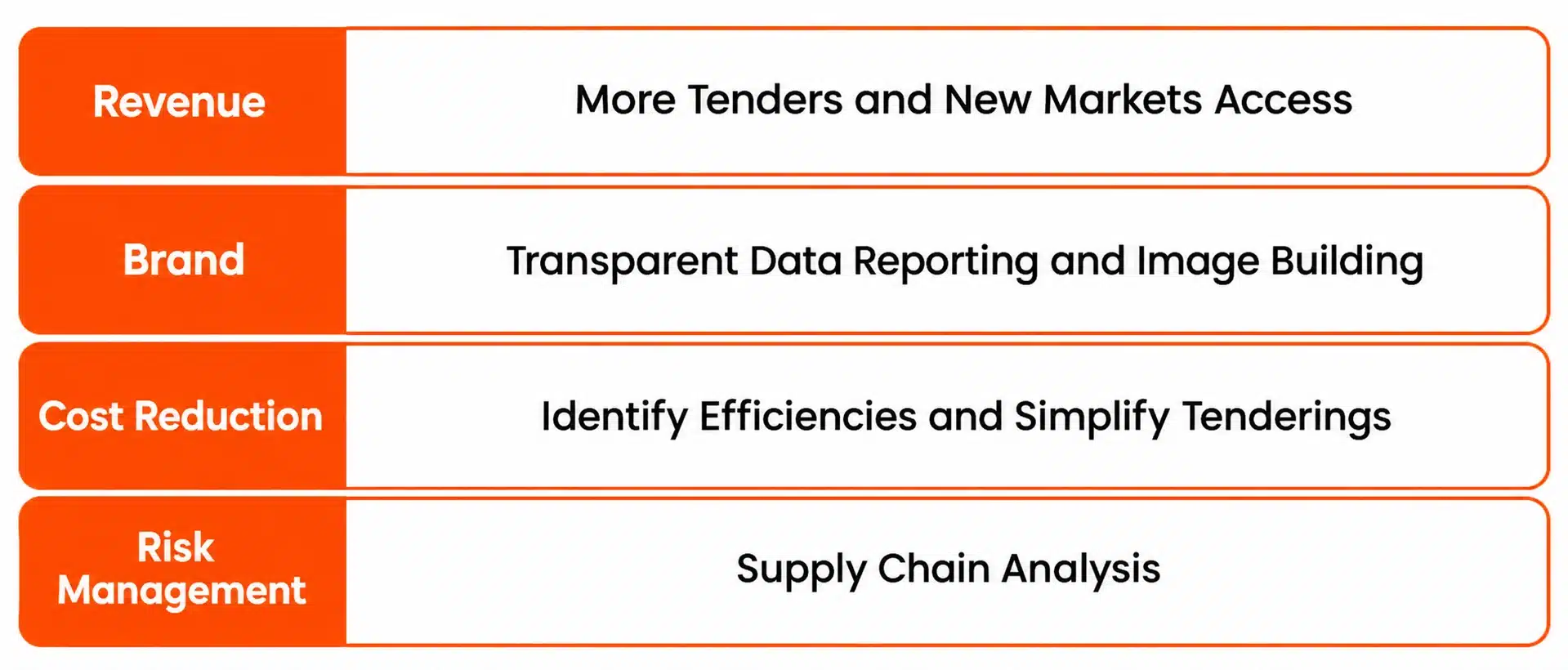
EPDs are properly structured, has comparative datasets for buyers to gain trust and are also powerful tools that strengthens the business across four major domains:
Current Outlook for Environmental Product Declarations (EPDs) Market Across the Globe
In 2025, the International EPD System attained an important milestone of surpassing 18,000 effective and registered Environmental Product Declarations. The number of EPDs published and the variety of industries and geographic regions represented have witnessed growth and strong environmental transparency and accountability. The milestone reflects increasing global demand for more clear, credible, and verifiable numbers across the supply chain.
European Union CPR Working Plan (2026- 2029)
The European Commission published its first CPR Working Plan for the years 2026 to 2029, setting clear urgencies for more harmonised technical specifications and related product necessities. The updated revised European Union CPR plan came into force on January 7, 2025, and became applicable from January 8, 2026. The regulations state the following aspects:
- Introducing the ‘Digital Product Passport linking’ for linking building mechanisms with verifiable environmental data, to boost performance, safety, and sustainability related matters.
- EN15804 became the backbone and strength for the CPR working plan. They must align with set sustainability indicators to gain trust of specifiers, and authorities.
- The fastest way to comply with the new plan is by publishing product- or service-specific EPDs. Therefore, the LCA that supports EPDs will also support CPR disclosures for global warming potential and other vital indicators.
Companies can initially start by reporting their cradle to gate GWP for priority products or services, reflecting A1 to A3. They can use measured plant utilities, concrete supplier invoices, and recent electricity factors for reporting purposes.
United States, State-Level ‘Buy Clean’ Laws require EPDs
The United States is building new state-level rules for EPDs. In California, the ‘Buy Clean California Act” requires EPDs for 4 main material groups as of 2025, with updated maximum GWP limits in effect from January 2025. These four material groups are structural steel, glass, mineral wool, and rebar.
Colorado, New York, and Minnesota have also passed similar statutes for their own material list and cut-off dates. Stakeholders now increasingly demand facility-specific EPDs and independently verified EPDs. Without an EPD, your product is ‘mathematically non-responsive’ to bids and not fit for the global market.
Green Buildings Certification Systems

Related Read: Why Supplier ESG Is Becoming a Business Imperative
LEED v4.1 introduces several changes that make materials credits more accessible for projects. It hands out up to 2 points if a team gathers at least 20 product-specific EPDs or showcases transparent documents. LEED v5 voluntary disclosure was legalized in March 2025 and continues to stress on carbon transparency.
Since many of the commercial projects are in compliance with these certifications, stakeholders consider EPDs a standard requirement. Hence, products without EPDs lose their market competitiveness in gaining tenders and contracts.
Why Investing in EPDs is a Smarter Move for Businesses?
To become Suppliers and Customers’ First Preference
Many projects require EPDs, such as construction- and manufacturing-related projects. Products covered under EPDs aid in gaining clients’ trust and loyalty and making products more attractive and sustainable in nature.
Competitive Advantage over Other Competitors
Businesses having EPDs depict measurable and verifiable environmental performance, which gives them an upper hand while pitching tenders and getting profitable contracts in the markets.
Scope 3 Emissions Reporting Requirements
EPDs provide verified, third-party assured data on suppliers’ carbon footprint, which is crucial for scope 3 greenhouse gas emission calculations. The EPDs’ underlying life cycle assessment includes scope 3 categories, meaning data showcase the product’s carbon emissions from raw materials to end of life so that targeted reductions can take place within the system.
Risk Management of Supply Chain Factors
Conducting EPDs forces companies to recognize supply chain factors in detail, revealing negative environmental impacts and potential risks before their market competitors. The importance of this proactive risk identification technique and management measures is vital for supply chain sustainability disclosures in the future.
Ensuring Innovation, Cost Cutting and Operational Efficiency across the Company
EPDs are based on LCAs; hence, they show the entire emission portfolio of products and services. Businesses can then use this insightful information to target actual innovations within the processes, raw materials, or designs to lessen the harmful negative impacts on the environment. They can also streamline operations and reduce the consumption of natural resources such as energy, minerals, and water, reducing the overall costs, and increasing operational efficiency across the operations.
Globally Strengthened International and Regional Development Share

Related Read: Climate Risk Management in Hong Kong’s Financial Sector
In 2025, among the licensee holders, Australia emerged as the largest contributor, accounting for 2,739 EPDs (29.2%), EPD North America followed with 558 EPDs (5.9%), EPD Turkey (2.1%), EPD India (1.7%), EPD Saudi Arabia (1%), and EPD Southeast Asia (1.3%). The distribution showcases both the level of maturity of EPDs in established markets and a higher level of engagement in emerging economies.
Although 86.38% of EPDs issued by EPD International were related to construction businesses, this reflects the sector’s strong vision and role in climate mitigation efforts through compliance, regulatory requirements, sustainable sourcing, green building initiatives, legal certifications, and LCAs in the built environment.
Other product categories include food and beverages (3.5%), paper and plastic products (2.7%), metal, mineral, plastic, and glass products (2.3%), chemical products (1.7%), machinery and equipment (1.4%), textiles, footwear, and apparel (0.83%), and vehicles and transport equipment (0.7%).
Conclusion
The role of EPDs is expected to enhance significantly in the coming years. They will play a central role in enabling sustainable production and consumption across the global markets. EPDs are becoming mainstream tools for environmental transparency, accountability, and sustainability.
Why Choose Ascentium India?
Ascentium India is a professional services firm which offers services including Sustainbility & ESG. Among its core offerings are providing sector-focused expertise and end-to-end support for decarbonization, life cycle assessment (LCA) and Environmental Product Declarations (EPDs). We collect primary data, run robust GHG and LCA calculations, perform validation, and align results with global frameworks and applicable Product Category Rules. Our team delivers high-level scoring maps, verification-ready documentation, and submission support that meet client needs and investor expectations-making Ascentium a strategic choice for forward-looking organisations seeking rigorous emissions accounting and product‑level environmental transparency. To learn more about our services, please email us at in-info@ascentium.com or reach out to us via WhatsApp at (+91) 77380 66622.